

Cloud Security and Complexity: Navigating the Evolving Landscape in 2026
When Clouds Get Complicated: Because Who Needs Simple When You Can Have a Security Circus?

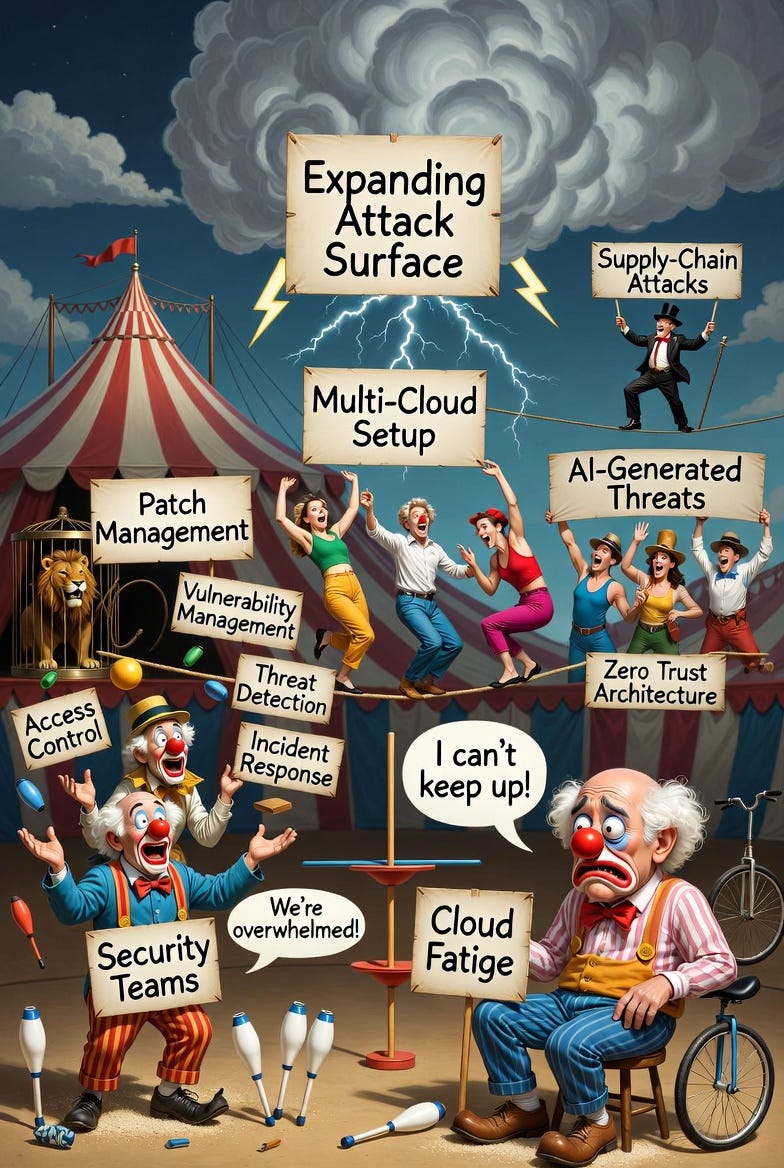
Security teams are grappling with unprecedented pressures. The surge in multi-cloud and hybrid environments has amplified complexity, introducing integration risks, vulnerabilities, and an ever-expanding attack surface. Discussions across the industry emphasize the urgent need for robust patch management, seamless interoperability, and strong defenses against threats like ransomware and supply-chain attacks. As “cloud fatigue” sets in among overwhelmed professionals, resources for mitigation are gaining traction. This blog post delves into these challenges, drawing on recent insights to explore how organizations can stay ahead.
The Rising Tide of Cloud Adoption and Its Complexities
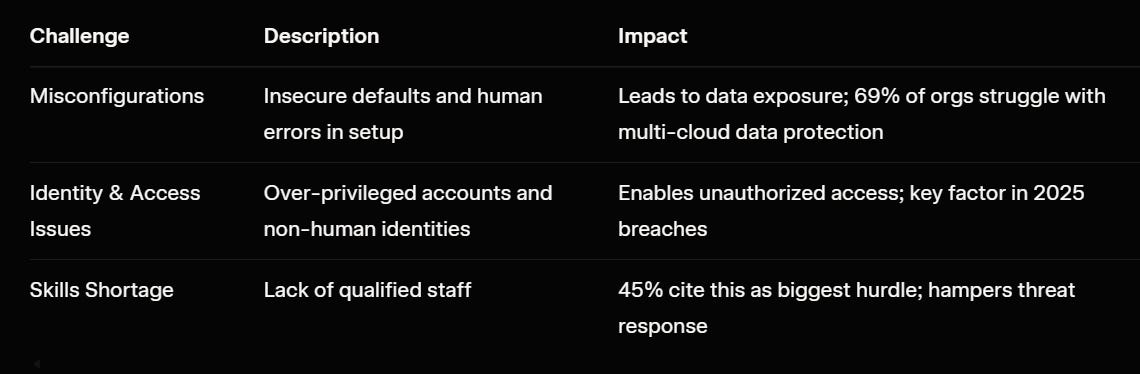
Cloud computing has become the backbone of modern business, with projections indicating that the global cloud market could reach $2.39 trillion by 2030, growing at a 20.4% compound annual rate. However, this rapid expansion brings a “complexity gap”—a mismatch between the speed of cloud innovation and security teams’ ability to maintain visibility, detection, and response. According to a 2026 Cloud Security Report, 82% of organizations cite cloud cost management as a top security challenge, while 69% struggle with consistent security across multi-cloud setups due to misconfigurations and data exposure.
This complexity is exacerbated by fragmented defenses, where security solutions proliferate without coordination, leading to slow responses and missed alerts. AI adoption further widens the attack surface, as autonomous agents and machine-speed threats outpace human analysts. For instance, 68% of cyber threat analysts report AI-generated phishing as harder to detect in 2025, a trend expected to intensify in 2026.
Integration Risks and Vulnerabilities: The Core Challenges
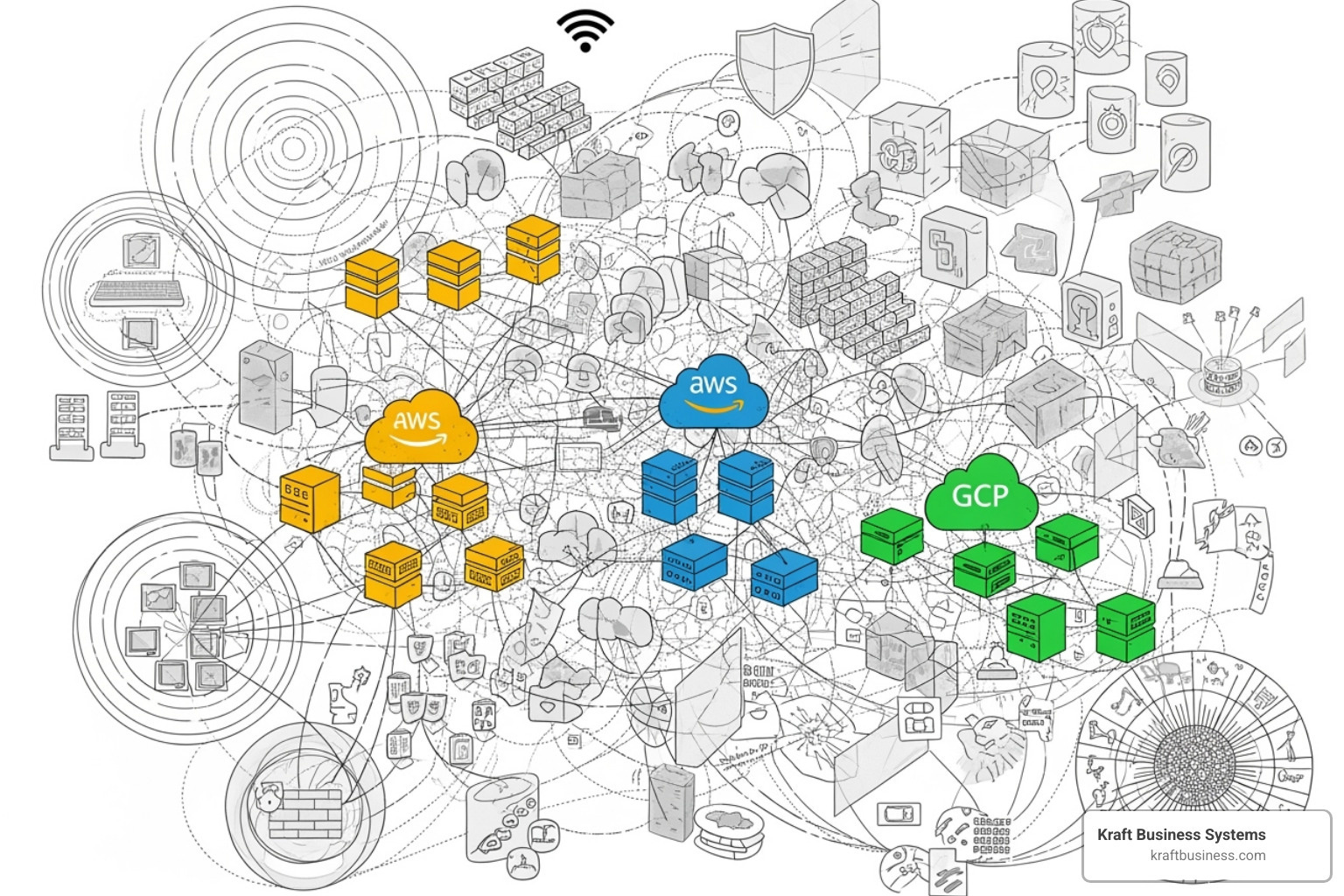
Integration risks stem from the interconnected nature of cloud services, where third-party dependencies and SaaS applications create blind spots. A staggering 65% of organizations face difficulties tracking risks from integrated apps and fixing misconfigurations. Vulnerabilities in these setups are rampant; for example, 56% of companies fail to properly protect data in multi-cloud environments, often falling short of regulatory requirements.
Persistent misconfigurations remain a top issue, with 54% of security professionals noting increased direct attacks on cloud infrastructure. Cloud security discussions on platforms like X highlight vulnerable areas such as data access problems, including leaving resources public or granting excessive permissions. As one expert noted in a recent thread, after access control, setting up continuous vulnerability management is the best investment in cloud environments.
The Need for Better Patch Management and Interoperability
Effective patch management is crucial in dynamic cloud settings, where “configuration drift” turns into exploit vectors. Interoperability challenges arise in hybrid/multi-cloud setups, complicating consistent policy enforcement. Industry reports stress automation and upskilling to bridge these gaps, with 51% of companies planning increased investments in cloud security.
On X, resources like practical manuals on cloud security are shared, emphasizing vulnerability management processes. Tools such as Google Cloud’s threat intelligence searches for ransomware like LockBit help defenders identify threats quickly.
Defenses Against Ransomware and Supply-Chain Attacks
Ransomware and supply-chain attacks exploit cloud dependencies, with 78% of CEOs identifying third-party risks as the top resilience challenge. The 2026 Global Cybersecurity Outlook warns of accelerating risks from AI and supply chain complexity. Defenses include Zero Trust models, AI-powered detection, and autonomous response mechanisms, predicted to become widespread by 2026.
Recent X posts discuss offensive security testing to spot vulnerabilities pre-emptively, as seen in Mandiant’s red teaming approaches. Cloud outages in 2025, like those at AWS and Azure, underscore the need for resilience beyond AI services.
Cloud Fatigue and the Expanding Attack Surface
“Cloud fatigue” reflects the burnout from managing sprawling environments, with 55% finding cloud protection more challenging than on-premises. The attack surface expands with AI integration, creating new vectors like agentic AI exploits. Fragmented SaaS strategies leave gaps in visibility and identity management, as highlighted in Cloud Security Alliance research.
X conversations promote runtime insights to prioritize exploitable vulnerabilities over mere alerts. Reports like HashiCorp’s 2025 Cloud Complexity Report stress that security must shape building processes, not just protect them.
Resources and Mitigation Strategies
To combat these issues, organizations should adopt unified approaches: real-time visibility, Policy-as-Code, and identity fabrics. Key resources include Fortinet’s 2026 trends report for automation insights and CSA’s guidance on SaaS security. On X, threads on Azure vulnerabilities remind us of the value in deep research.
Partnering with experts can streamline implementations, avoiding pitfalls in complex setups.
Conclusion
As cloud security evolves in 2026, addressing complexity requires proactive strategies, from automation to skills development. By focusing on mitigation resources and learning from industry discussions, teams can reduce fatigue and fortify against threats. The key is not just reacting to risks but architecting resilience from the ground up. Stay vigilant— the cloud’s potential is vast, but so are its perils.